
Meet the Team
We are an international team of behavioural and evolutionary biologists based at Leibniz-IZW in Berlin, Germany, and the Ngorongoro Crater, Tanzania. We do our research in close collaboration with the Ngorongoro Conservation Area Authority and various international research teams. We also take part in various science communication and outreach initiatives. Within our core team and through our collaborations, we embrace diversity in ideas, skills, scientific disciplines and approaches as well as cultural background. If you want to join our team, please go to our Job offers page.
The core team
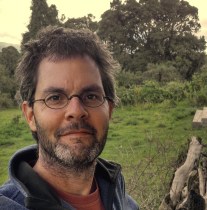 Oliver Höner. Senior scientist. Co-director, Administrative head and Database manager since 1996. Oliver studies the eco-evolutionary processes shaping the social behaviour, life history and fitness of spotted hyenas. These include mate choice, sexual conflict, social dominance, sex roles, cultural inheritance, and dispersal. His current work focuses on three topics: (i) how demographic, kinship and ecological dynamics impact the social organisation and fitness of hyenas, (ii) how the social and genetic properties of groups impact population demographic resilience and responses to climate change, and (iii) the socio-ecological determinants of humans-carnivores conflicts and coexistence. Member of the IUCN Hyena Specialist Group. Swiss and Brazilian.
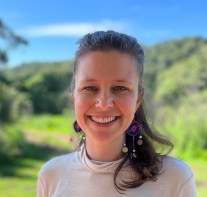 Eve Davidian. Postdoctoral research associate at the Institute for Evolutionary Sciences in Montpellier (ISEM, CNRS, France). Eve joined the project in 2010 and is Co-director & Scientific head since 2020. She applies concepts and theories from behavioral ecology, evolutionary biology and socio-endocrinology to study the determinants and fitness consequences of individual strategies and decisions to acquire resources, mates, social allies, and power in group-living animals. For this, she primarily uses the long-term empirical data on the Crater spotted hyenas but also tackles questions using comparative approach. Her current work explores two main topics: (i) the impact of demographic and kinship dynamics on social conventions and (ii) the eco-evolutionary drivers of power inequalities and dominance styles in social mammals. Funded by French-ANR fellowship. French, US-American, Armenian, Lebanese, with a Mexican sprinkle.
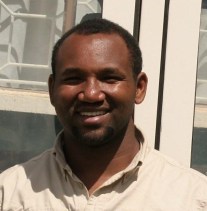 Philemon Naman. Field assistant since 2015. He collects demographic, behavioural and genetic data for the long-term monitoring of the Crater hyena population. Philemon also conducts monthly prey surveys inside the Crater to monitor seasonal changes in prey abundance in hyena territories, and call ups to quantify fluctuation in hyena distribution in Ngorongoro Area. He plays a key role in maintaining ties with local authorities, stakeholders and community of Ngorongoro Conservation Area. He assists us with the maintenance of research equipment and vehicles, and with permit applications. He graduated (BsC) from the College of African Wildlife management in Mweka (Tanzania) in 2014. Tanzanian, Iraqw tribe.
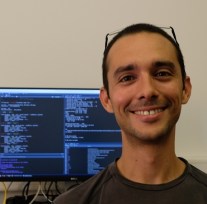 Alexandre Courtiol. Senior scientist. Head data analyst and statistical adviser since 2013. He oversees the development of a handy R package {hyenaR} which many of us use to extract demographic and ecological data from the Ngorongoro hyena database. Alex chips in when it comes to all things mate choice, sexual selection and demography. He is the head of the Data Zoo Gang, a research team at the Leibniz-IZW specialized in wildlife quantitative biology and in R package development for ecology and conservation. French.
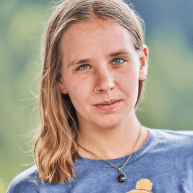 Marta Mosna. PhD candidate (Dahlem Graduate School, Freie Universität Berlin) since June 2023. Marta is dedicated to unravelling the complexities of dominance styles and hierarchical properties within the world of spotted hyenas. Her research is part of the collaborative project “DESPOT” which delves into the evolution of despotic societies in mammals, aiming to uncover the evolutionary origins of variations in social relationships and hierarchical structures among group-living mammals. For this, Marta will collaborate tightly with Tal Kleinhause-Goldman Gedalyahou and Drs. Elise Huchard (ISEM-France) and Dieter Lukas (Max-Planck EVA, Leipzig). Supervised by Oliver, Eve, and Profs. Jens Rolff (FU) and Jens Krause (FU, Leibniz-IGB). Funded by DFG fellowship. Italian.
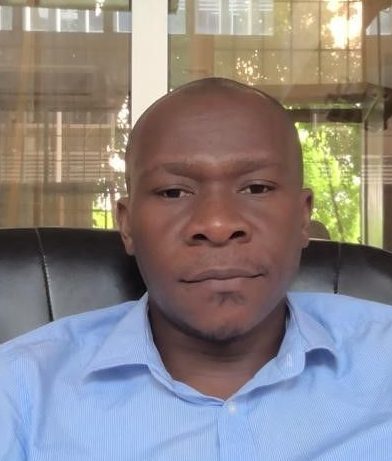 Gregory Mtega. PhD candidate (Sokoine University of Agriculture, Tanzania) since October 2024. He is a wildlife ecologist working with the department of wildlife management and research of Ngorongoro Conservation Area Authority in Tanzania. He studies the implications of traditional beliefs and practices on wildlife conservation in the Serengeti ecosystem, with a special focus on spotted hyenas and other large carnivores. Supervised by Prof A. Rija, Dr R. Byamungu, Dr S. Mariki, Prof R. Kadigi (Sokoine University of Agriculture) and Oliver. Tanzanian.
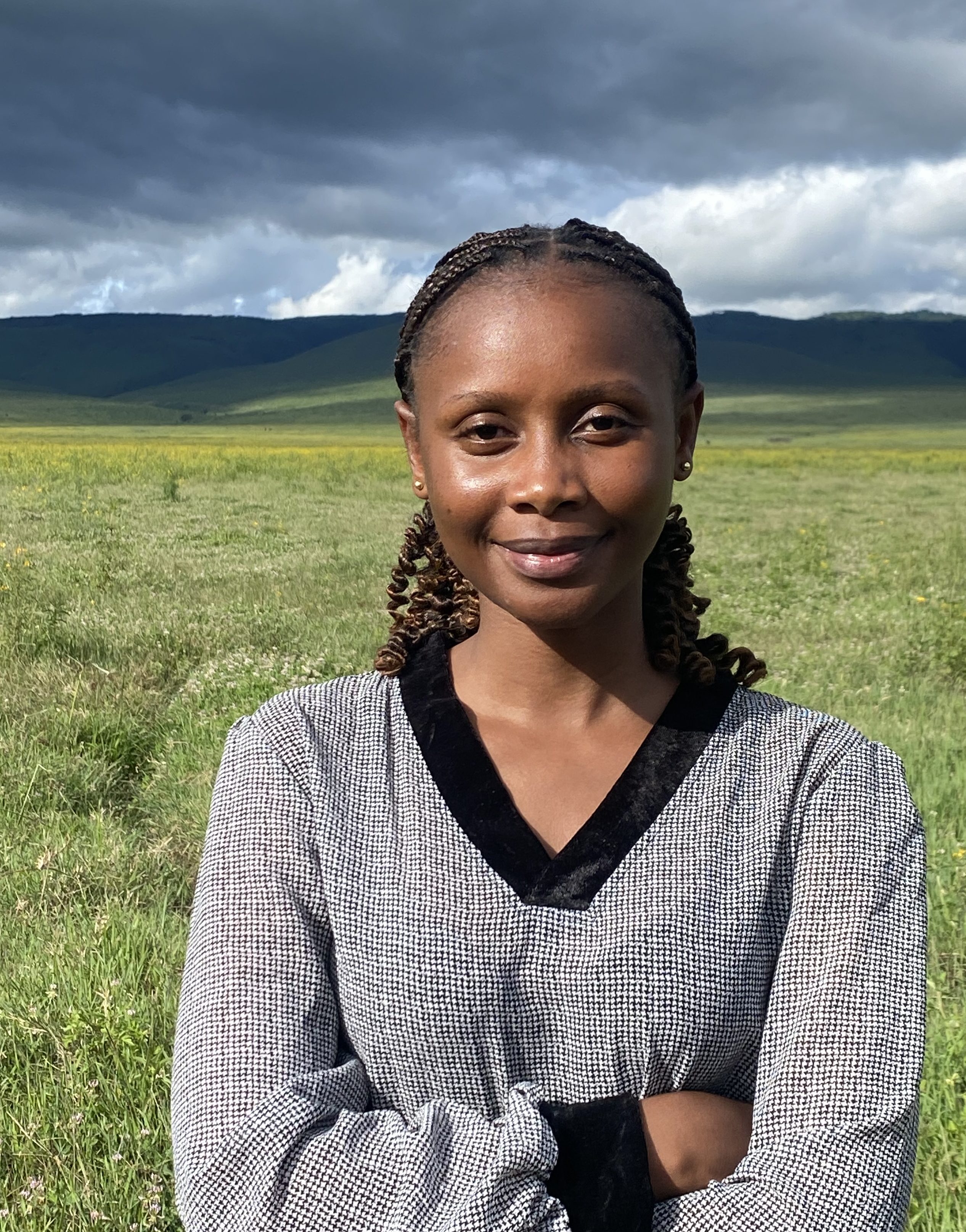 Herieth Mkomwa. Field assistant since 2024. She collects demographic and detailed behavioural data and assists in conducting monthly animal censuses for prey density estimates of our study clans. Herieth and Philemon also help with permit applications. Graduated (BSc) from Sokoine University of Agriculture in 2020. Tanzanian, Pare tribe.
 Larissa Arantes. Postdoctoral research associate since 2022. Larissa specializes in applying genomic tools for biodiversity conservation. She is generating high‐density genomic marker data for thousands of individual samples spanning 8 generations to quantify the genetic diversity as well as the evolutionary and ecological impact of current environmental change on the Crater hyena population. Her work is done in tight collaboration with Dr. Camila Mazzoni (BeGenDiv) and Prof. Loeske Kruuk (University of Edinburgh). ERC fellowship. Brazilian.
 Ella White. PhD candidate (Dahlem Graduate School, Freie Universität Berlin) since November 2022. Ella specializes in the modelling of ecological processes and demographic responses of natural populations to disturbances. She will assess the resilience to socio-ecological disturbances of the spotted hyenas in the Ngorongoro Crater and Serengeti National Park. Ella’s overarching goal is to develop a new analytical approach to quantify such demographic responses, and to provide tools for applied conservation. She is co-supervised by Oliver and Drs Viktoriia Radchuk and Sarah Benhaiem from the Department of Ecological Dynamics (D6, Leibniz-IZW), and Profs. Jens Rolff (FU) and Adam Clark (University of Graz). She collaborates tightly with Eve and Dr. Julie Louvrier (D6). Funded by the German Federal Ministry of Education and Research (BMBF). Kiwi (aka New Zealander).
 Dora Berger. Master’s student (University of Zagreb, Croatia) since February 2023. She studies the roots of socio-sexual relationships between males and females in spotted hyenas. Specifically, Dora investigates if males adopt distinct strategies to build a relationship with females and how male and female life history interact in that context. For this, she will analyze over 2000 video recordings of the behavior of our beloved Crater spotted hyenas. Supervised by Eve, Oliver, and Prof. Zoran Tadić (University of Zagreb). Croatian.
 Leonie Walter. Master’s student (Freie Universität Berlin) since October 2022. She studies the impact of female mate choice on the relatedness among clan members. For her work, Leonie uses our Crater hyena genetic pedigree which details the family ties for over 3000 hyenas spanning 9 generations. Supervised by Alex. German.
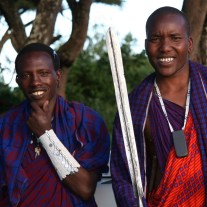 Loltogom Oltumo, Tegela Karya and Jose Karya. Watchmen & Station assistants since 2007. Guard the research cabin, contribute to equipment maintenance, and assist with daily chores. They also help communicate and set up collaborations with Ngorongoro rangers and Maasai from nearby villages. In 2020, Jose replaced Tegela who, after training in a local culinary school, was employed as a Pastry Chef in a nearby Lodge. Tanzanian, Maasai tribe.
Former members
Malvina Andris (technical assistant), Liam Bailey (postdoctoral associate), Nelly Boyer (technical assistant), Nicole Burgener (technical assistant), Renita Danabalan (postdoctoral associate), Arjun Dheer (PhD), Elisa Donati (intern), Noon Bushra Eltahir (student helper), Anne Hertel (scientific helper), Lekoko Kimaay (watchman), Berit Kostka (technical assistant), Zimai Li (MSc Student), Michelle Lindson (technical assistant), Angelika Mai (technical assistant), Tapwaa Ndooto (watchman), Sylvia Schulz van Endert (scientific helper), Melanie Szameitat (scientific helper), Alexis Verfaillie (MSc Student), Colin Vullioud (scientific helper), Bettina Wachter (senior scientist and Project co-founder), Kerstin Wilhelm (technical assistant).
Our Collaborators
- Dr Camila Mazzoni (BeGenDiv)
- Prof Loeske Kruuk (University Edinburgh)
- Dr Laly Lichtenfeld (Tanzania People & Wildlife). Human-carnivore coexistence in the NCA
- Dr Elise Huchard (ISEM-France). Intersexual power relationships and dominance
- Prof. Peter Kappeler (Leibniz-DPZ). Sex ratio & Intersexual power relationships
- Dr Timothée Bonnet (ANU). Quantitative genetics & Evolution of fitness
- Dr Sam Ellis and Prof Darren Croft (University of Exeter). Causes and consequences of kinship dynamics
- Dr Viktoriia Radchuk (Leibniz-IZW). Quantitative ecology. Modelling demographic resilience
- Dr Sarah Benhaiem (Leibniz-IZW). Co-director of Serengeti Hyena Project
- Dagmar Thierer and Stephan Karl (Leibniz-IZW). Technical assistants. Perform parentage analyses of the Crater hyenas based on microsatellite fingerprinting
- Dr Jella Wauters (Leibniz-IZW). Wildlife endocrinology. Performs ELISA for quantification of cortisol metabolities in hyenas feces
The research station
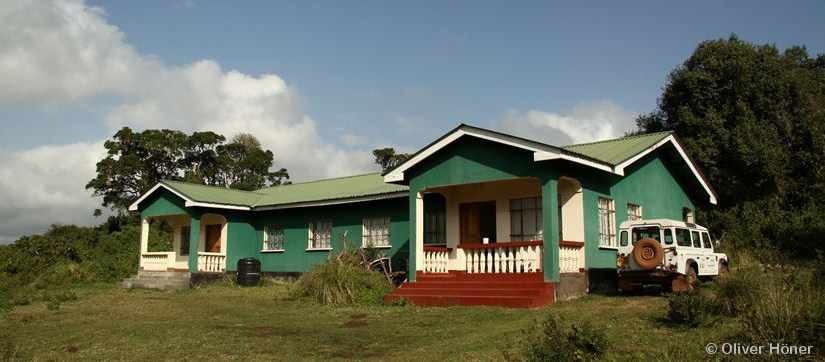
Our research station is located on the Eastern rim of the Crater. It was built by the Ngorongoro Conservation Area Authority (NCAA) close to a rangers camp and is situated close to Ngorongoro Sopa Lodge; the nearest Maasai village is about 5 km away. Equipment and food can be bought a one-hour drive away in Karatu.
The station is run with solar power and equipped with computers, printers, scanners etc.; access to the internet comes via a satellite dish. One room is dedicated to sample processing and storage, and is equipped with a centrifuge, a liquid nitrogen container and equipment to perform dissections.


 Ngorongoro Hyena Project